How to Implement CAPTCHA in ASP.Net MVC
What is CAPTCHA?
CAPTCHA stands for Completely Automated Public Turing test to tell Computers and Humans Apart. It is a security feature designed to differentiate between human users and automated bots. By requiring users to complete a challenge that is difficult for machines but easy for humans, CAPTCHA helps prevent spam, abuse, and fraudulent activities on websites.
Real-world applications of CAPTCHA include protecting online forms, preventing automated account creation, and securing login pages. For instance, many websites use CAPTCHA to ensure that a user is human before allowing them to submit a comment, register for an account, or make a purchase.
Prerequisites
- Visual Studio installed on your machine.
- Basic knowledge of ASP.NET MVC framework.
- Familiarity with NuGet package manager.
Step 1: Create the Empty ASP.NET MVC Application
Open Visual Studio and create a new project. Select ASP.NET Web Application and choose the Empty template. This will give you a clean slate to start with.
Step 2: Add the CaptchaMvc Library
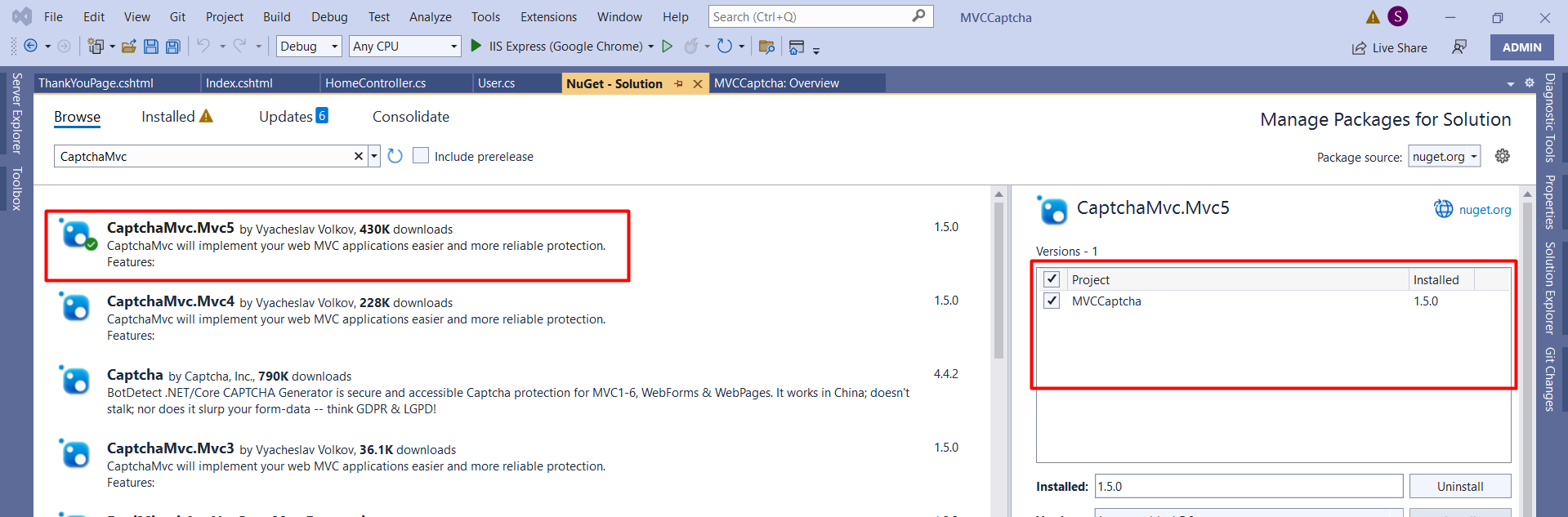
Add the CaptchaMvc library to your project using NuGet Package Manager. You can do this by right-clicking on your project in Solution Explorer, selecting Manage NuGet Packages, and searching for CaptchaMvc. Click Install to add it to your references.
Step 3: Create the User Model
In the Model layer, create a User class to hold the user details. This class will represent the data structure for the form submission.
public class User { public int Id { get; set; } public string Name { get; set; } public string LastName { get; set; } }Step 4: Create the HomeController
Your next step is to create a controller that will handle the requests. Here’s a simple implementation of the HomeController:
using CaptchaMvc.HtmlHelpers; using System.Web.Mvc; namespace MVCCaptcha.Controllers { public class HomeController : Controller { public ActionResult Index() { return View(); } public ActionResult About() { ViewBag.Message = "Your application description page."; return View(); } public ActionResult Contact() { ViewBag.Message = "Your contact page."; return View(); } [HttpPost] public ActionResult Index(string empty) { // Code for validating the CAPTCHA if (this.IsCaptchaValid("Captcha is not valid")) { return RedirectToAction("ThankYouPage"); } ViewBag.ErrMessage = "Error: captcha is not valid."; return View(); } public ActionResult ThankYouPage() { return View(); } } }Ensure that you import the CaptchaMvc.HtmlHelpers namespace to access the CAPTCHA functionalities.
Step 5: Create the Index View
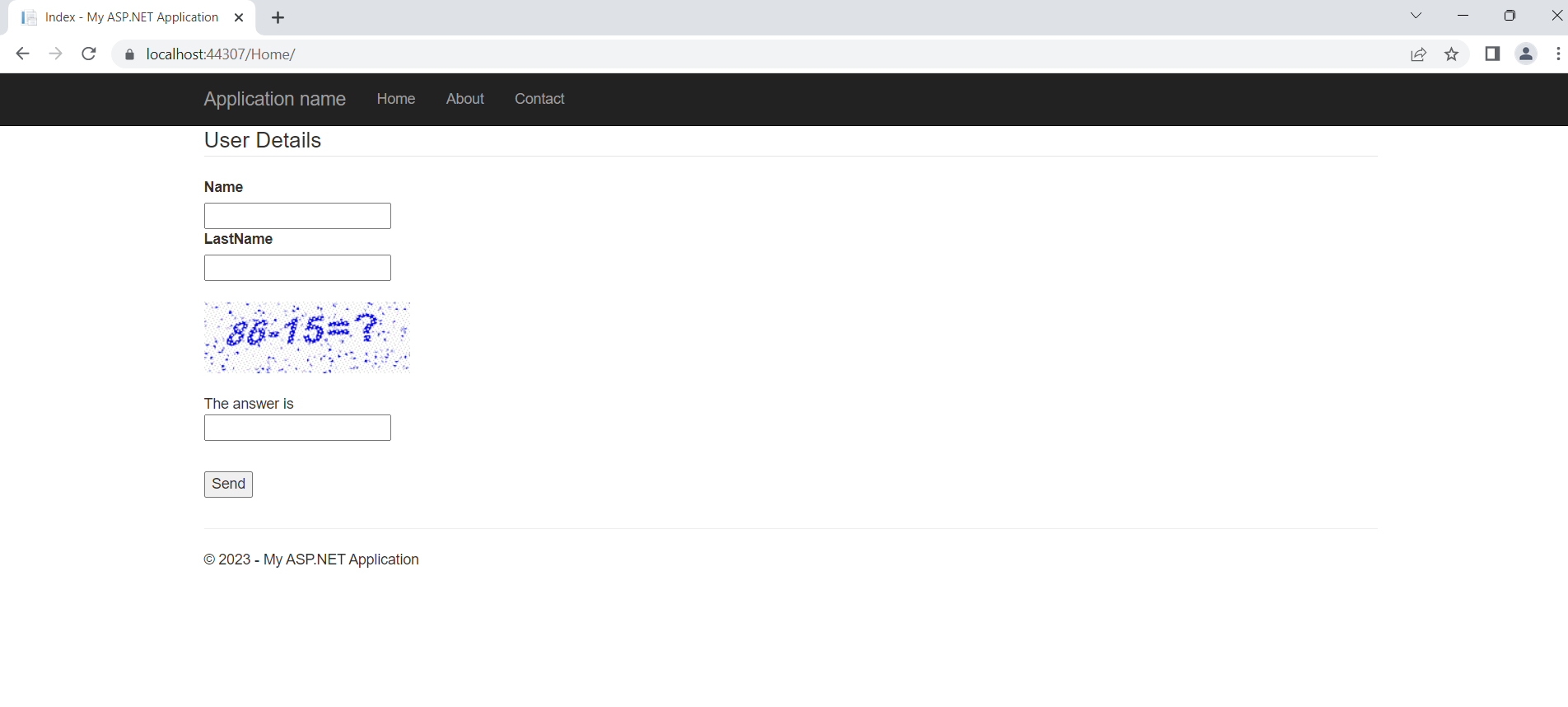
Next, create the Index View for your application. This view will contain the form where users can input their details and solve the CAPTCHA:
@using CaptchaMvc.HtmlHelpers @model MVCCaptcha.Models.User @{ ViewBag.Title = "Index"; } @using (Html.BeginForm()) { @Html.ValidationSummary(true) } The example above uses the @Html.MathCaptcha() helper which generates a simple mathematical CAPTCHA. Alternatively, you can use @Html.Captcha(3) to create a character-based CAPTCHA with a length of 3 characters.
Step 6: Create the Thank You Page
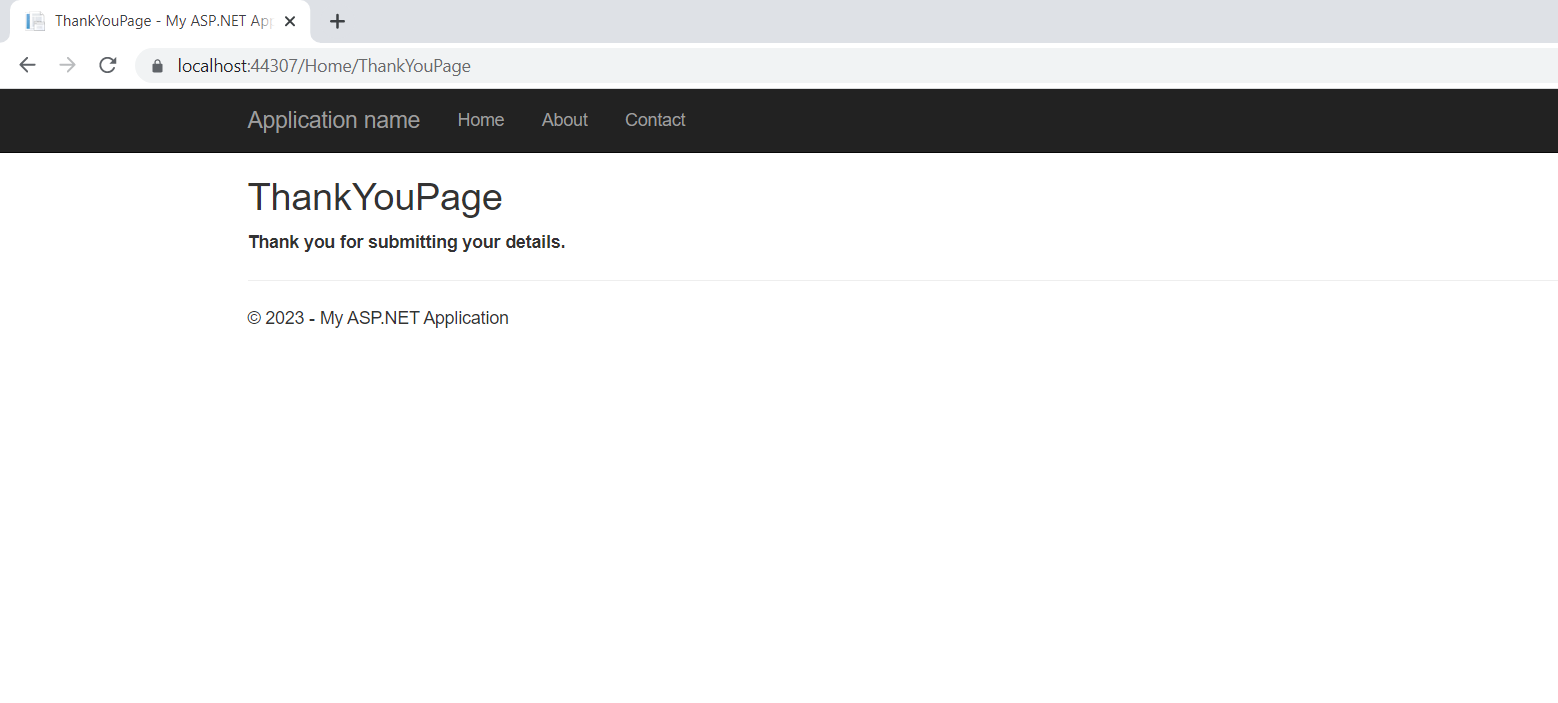
Finally, create a simple ThankYouPage view to display a message after form submission:
@model MVCCaptcha.Models.User @{ ViewBag.Title = "ThankYouPage"; } Thank You
Thank you for submitting your details. Edge Cases & Gotchas
When implementing CAPTCHA, consider the following edge cases and gotchas:
- Accessibility: Ensure that your CAPTCHA implementation is accessible to users with disabilities. Consider providing an audio CAPTCHA option.
- Usability: Avoid overly complex CAPTCHAs that may frustrate users. Test your CAPTCHA with real users to find a balance between security and usability.
- Session Management: Be aware of session timeouts. If a user takes too long to fill out the form, the CAPTCHA may expire, causing frustration.
Performance & Best Practices
To ensure optimal performance while using CAPTCHA in your application, follow these best practices:
- Limit CAPTCHA usage: Only use CAPTCHA on forms that are susceptible to spam or abuse.
- Optimize CAPTCHA loading: Load CAPTCHA scripts asynchronously to avoid blocking the rendering of the page.
- Monitor CAPTCHA effectiveness: Regularly analyze your CAPTCHA implementation to ensure it is effectively blocking bots without hindering legitimate users.
Conclusion
In this tutorial, we explored how to implement CAPTCHA in an ASP.NET MVC application. We covered the necessary steps, including creating a user model, setting up the controller, and designing the views. Here are the key takeaways:
- CAPTCHA is essential for protecting your web applications from automated abuse.
- Implementing CAPTCHA in ASP.NET MVC is straightforward with the CaptchaMvc library.
- Consider accessibility and usability when designing your CAPTCHA solution.
- Regularly monitor and optimize your CAPTCHA implementation for better performance.