
How to Convert Text to Speech in Asp.Net
What is Text-to-Speech?
Text-to-speech (TTS) technology enables the conversion of written text into spoken words. This functionality can be particularly beneficial in a variety of applications, such as educational tools, accessibility features for visually impaired users, and interactive voice response systems. By integrating TTS into your ASP.NET MVC application, you can enhance user experience and provide more engaging interactions.
For instance, imagine a learning platform where students can listen to articles instead of reading them. This feature can improve comprehension and retention, catering to different learning styles. Additionally, TTS can be used in customer service applications to read out information or instructions, making it easier for users to access the information they need.
Prerequisites
Before diving into the implementation, ensure you have the following prerequisites:
- Visual Studio: You should have Visual Studio installed on your machine, preferably the latest version, as it provides a robust environment for ASP.NET MVC development.
- .NET Framework: This tutorial will use the .NET Framework that supports the System.Speech.Synthesis namespace—typically .NET Framework 4.5 or higher.
- Basic Knowledge of ASP.NET MVC: Familiarity with ASP.NET MVC concepts such as controllers, views, and routing will be beneficial.
Implementation Steps
To implement text-to-speech functionality in your ASP.NET MVC application, follow these steps:
- Create or open your ASP.NET MVC project: Start a new project or open an existing one where you want to add the TTS functionality.
- Create a controller action: In your controller, create an action method that will handle the text-to-speech conversion.
- Adjust the speech rate: Use the
Rateproperty of theSpeechSynthesizerobject to modify the speed of the speech output. - Configure the voice: Use the
SelectVoiceByHintsmethod to choose the voice characteristics. - Create a view: Design a view that allows users to input text and trigger the text-to-speech conversion process.
- Handle audio playback: Ensure your application can play the generated audio or manage it as required.
Code Example
Below is a sample code example for the controller action that converts text to speech, allowing users to adjust the speech rate and voice type:
using System;
using System.Speech.Synthesis;
using System.Threading.Tasks;
using System.Web.Mvc;

namespace TextToSpeech.Controllers {
    public class HomeController : Controller {
        public ActionResult Index() {
            return View();
        }

        public async Task<ActionResult> ConvertToSpeech(string textSpeech, int rate = 0, string voiceGender = "Female") {
            using (var synth = new SpeechSynthesizer()) {
                // Configure the voice and output format
                synth.SelectVoiceByHints(ParseVoiceGender(voiceGender), VoiceAge.Adult);
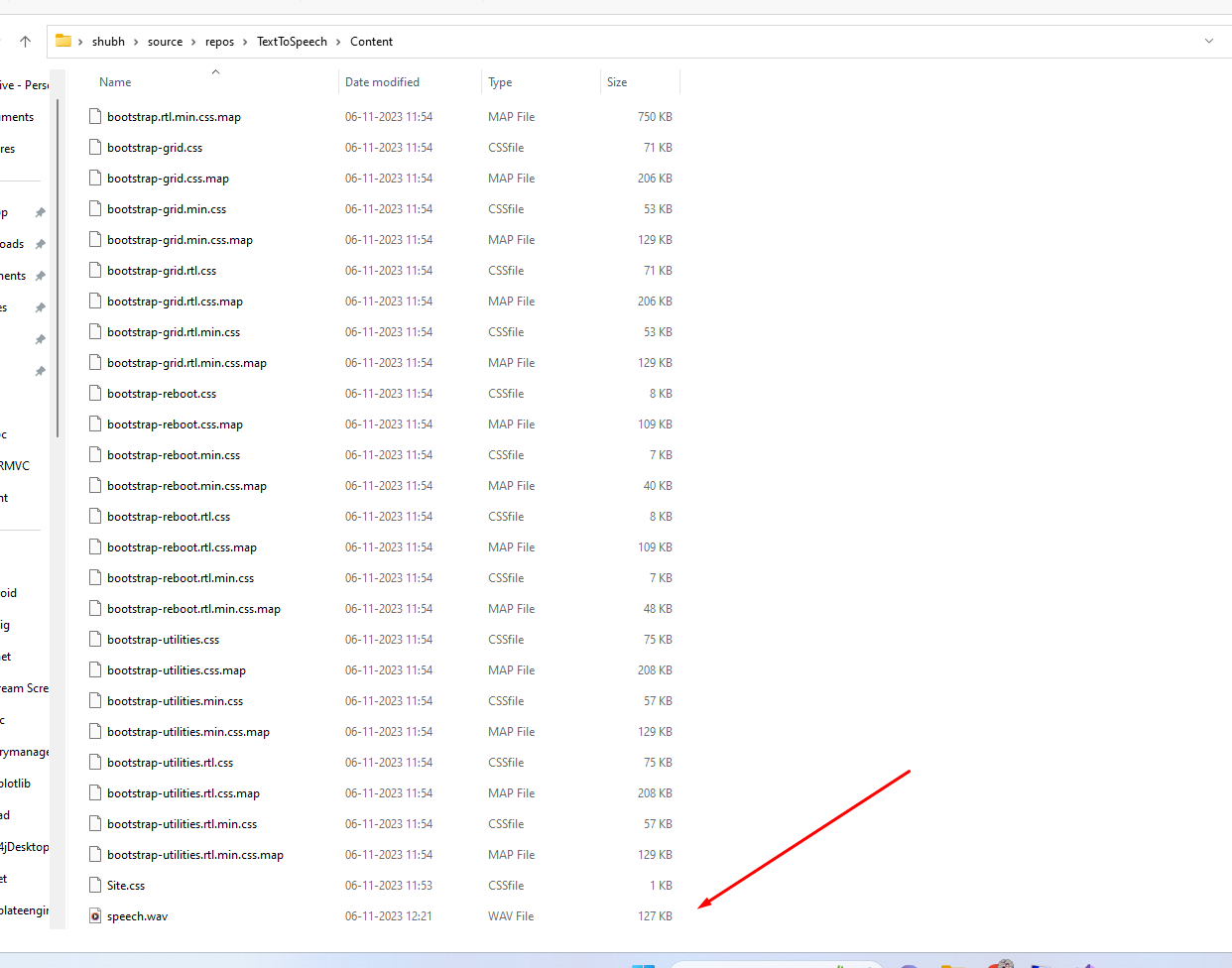
                synth.SetOutputToWaveFile(Server.MapPath("~/Content/speech.wav"));
                // Save the audio to a file
                synth.Rate = rate; // Adjust the speech rate
                synth.Speak(textSpeech); // Convert the text to speech
            }
            return File("~/Content/speech.wav", "audio/wav");
        }

        private VoiceGender ParseVoiceGender(string gender) {
            if (gender.Equals("Male", StringComparison.OrdinalIgnoreCase)) return VoiceGender.Male;
            else return VoiceGender.Female;
        }
    }
}
In this code example, users can control the speech rate and voice type:
Adjusting Speech Rate
By passing the rate parameter to the action, users can set the speech rate. A value of 0 represents the default rate, negative values make it slower, and positive values make it faster. For example, a rate of -5 will slow down the speech, while a rate of 5 will speed it up.
Changing Voice Type
The voiceGender parameter allows users to select the gender of the voice. In this example, we use the SelectVoiceByHints method to configure the voice based on the provided gender. You can also extend this to allow users to select different voice ages and types if desired.
Creating the View
Now that we have the controller set up, let's create a simple view that allows users to input text and submit it for conversion:
@{ ViewBag.Title = "Home Page"; }
ASP.NET
@using (Html.BeginForm("ConvertToSpeech", "Home", FormMethod.Post)) {
}
This view includes an input box for text, a numeric input for the speech rate, and a dropdown for selecting the voice gender. Once the user submits the form, the text will be sent to the ConvertToSpeech action in the controller for processing.
Edge Cases & Gotchas
When implementing text-to-speech functionality, consider the following edge cases:
- Empty Input: Ensure the application handles cases where the user submits an empty text input. You can implement validation to prevent this.
- Long Text Inputs: Be cautious with very long text submissions, as they may exceed the audio file size limits or take a long time to process. You may want to limit the character count.
- Voice Availability: Not all systems may have the same voices installed. Implement a fallback mechanism or provide a list of available voices to users.
Performance & Best Practices
To ensure optimal performance and usability of your text-to-speech feature, consider the following best practices:
- Asynchronous Processing: Use asynchronous programming for the text-to-speech conversion to avoid blocking the main thread, which can lead to a poor user experience.
- File Management: Manage audio files carefully. Consider implementing a cleanup process to delete old audio files after they are no longer needed to save disk space.
- Feedback Mechanism: Provide users with feedback while the audio is being generated, such as a loading spinner or progress indicator.
- Security Considerations: Always validate and sanitize user inputs to avoid potential security vulnerabilities, such as code injection.
Conclusion
By following the steps outlined in this article, you can successfully implement text-to-speech functionality in your ASP.NET MVC application, enhancing user accessibility and engagement. Here are some key takeaways:
- Text-to-speech technology can significantly improve user experience in various applications.
- ASP.NET MVC allows for easy integration of TTS functionality using the
System.Speech.Synthesisnamespace. - Users can control the speech rate and voice type, providing a customizable experience.
- Consider edge cases and best practices to ensure robust and efficient implementation.
